Origin Stories for Superhero Powers: How Legends Are Born
The moment an ordinary life collides with the extraordinary is rarely clean or simple. For every caped crusader or masked menace, there's a defining crucible, a pivotal incident that irrevocably reshapes their destiny. These pivotal transformations—the Origin Stories for Superhero Powers—are the bedrock of pop culture mythology, illuminating how average people, or even alien beings, come to wield impossible abilities and bear immense responsibilities. They are the initial spark that ignites a hero's (or villain's) journey, etching their very essence into the fabric of their fictional worlds and, often, our own.
At a Glance: What Makes an Origin Story Resonate?
- The Foundation of Identity: Origin stories define who a character is, why they fight, and what drives them.
- Humanity in the Heroic: They ground fantastical powers in relatable experiences like trauma, ambition, or altruism.
- The Catalyst Moment: A specific event that forever alters the character's path, often involving sacrifice or loss.
- Moral Ambiguity: Many of the most compelling origins aren't purely heroic, exploring grey areas of intent and consequence.
- Evolution Over Time: The best origin stories can be revisited and deepened, revealing new facets of a character's past.
Why Origin Stories Matter: The Core of Every Legend
Before the cosmic battles and world-saving feats, there was the beginning. Origin stories aren't just backstory; they're the psychological and philosophical blueprints for every character. They take individuals from mundane existence to mythic status, forcing them to confront their deepest fears and aspirations. Without a strong origin, a character's actions, no matter how grand, often feel hollow.
Defining Identity and Purpose
Imagine Batman without the trauma of his parents' murder, or Spider-Man without the tragic lesson of Uncle Ben's death. Their motivations would be entirely different, their core identities lost. Bruce Wayne’s vow to fight crime, adopted after witnessing the brutal murder of Thomas and Martha Wayne, isn’t just a detail; it's the very engine of Batman’s unyielding crusade. Similarly, Peter Parker’s journey from a self-absorbed teen to a responsibility-laden hero after his negligence led to his uncle's demise, defines everything he later does. These aren’t just power acquisitions; they are soul-defining moments.
Transforming the Ordinary: From Human to Myth
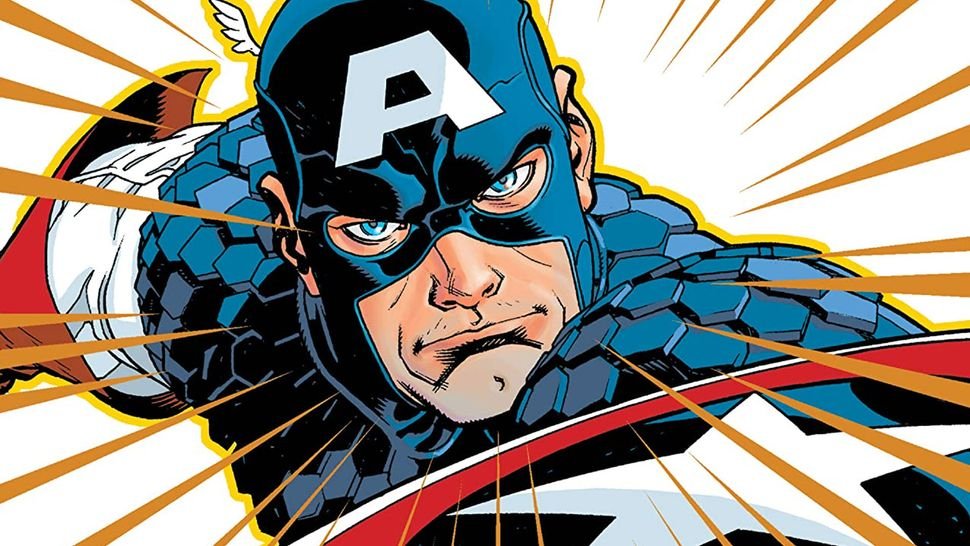
Origin stories are narrative alchemy, transforming the familiar into the fantastic. They turn a frail, patriotic young man like Steve Rogers into the indomitable Captain America through a super-soldier serum. They elevate a brilliant but arrogant surgeon, Stephen Strange, into the Sorcerer Supreme, learning mystical arts after his hands are irreparably damaged in a car crash. This transformation often involves a literal or metaphorical death of the old self, making way for the legend.
Relatability and Emotional Connection
Even when dealing with alien beings or gods, a good origin story finds a way to anchor the character in relatable human experiences. Superman, a refugee from a dying world, finds his moral compass through his adoptive Earth parents, the Kents. His alienness is softened by his upbringing as Clark Kent, making his eventual heroism feel earned and deeply human. We connect not just with the spectacle of powers, but with the struggle, the sacrifice, and the choice that birthed them.
The Archetypes of Emergence: Common Origin Story Categories
While every hero's path is unique, many origin stories fall into recognizable patterns, each offering a distinct lens through which to understand the character.
The Accidental Hero/Villain: Unforeseen Transformations
Perhaps the most common archetype, this category involves characters whose powers emerge from unexpected, often chaotic, circumstances. They don't seek power; power finds them, often with unintended consequences.
- Science Gone Wrong (or Right): Many heroes gain their abilities through scientific accidents, experiments, or advanced technology.
- Spider-Man: Peter Parker, a high school student, gains spider-like abilities after being bitten by a radioactive spider. His initial misuse of these powers leads directly to Uncle Ben's death, forcing him to understand that "with great power comes great responsibility."
- The Flash: Forensic scientist Barry Allen is struck by lightning during a lab accident involving chemicals, granting him super-speed.
- Doctor Strange: Stephen Strange, a brilliant but arrogant surgeon, loses the use of his hands in a car crash. Desperate for a cure, he seeks out the Ancient One, only to become a master of the mystic arts, filling a spiritual void left by his career-ending injury and past familial losses.
- Swamp Thing: Scientist Alex Olsen's initial transformation into Swamp Thing was an accident, but Alan Moore's revised origin deepens the tragedy: Olsen died, and Swamp Thing was born from plant life absorbing his memories and pain. This struggle for identity, believing itself to be human, makes for a profoundly tragic narrative.
- Iron Man: Tony Stark, a wealthy industrialist and genius inventor, is kidnapped by terrorists and forced to build weapons. Instead, he constructs the first Iron Man suit to escape, transforming him from a playboy into a hero dedicated to protecting the world. His origin, from Stan Lee, Larry Lieber, Don Heck, and Jack Kirby, broke the mold by showing a man who became "super" through his own ingenuity and then had to learn how to be a hero.
- Cosmic Intervention/Mutation: Some characters are fundamentally altered by forces beyond human comprehension, or are born different.
- Galactus: Before becoming the "Devourer of Worlds," Galan was a humanoid who witnessed the impending Big Bang. Encountering powerful energy, he was sealed in a Cosmic Egg. Reborn with an insatiable hunger, he became the tragic villain Galactus, consuming planets to sate his pain.
- Rogue: A young woman who accidentally absorbed the memories and caused a coma in a boy named Cody Robbins with a kiss. Her mutant powers, which make physical contact dangerous, led her to join the Brotherhood of Mutants before she eventually sought redemption with the X-Men.
- Superman: The ultimate alien origin. Baby Kal-El, sent from the doomed planet Krypton by his parents Jor-El and Lara, lands on Earth, where the yellow sun grants him extraordinary powers. Raised as Clark Kent, he chooses to use his gifts for the good of humanity.
- Wolverine: James Howlett, born with bone claws and a healing factor, is the illegitimate son of a prominent farming family. His first act of violence, killing Thomas Logan who murdered his presumed father, sets him on a tragic path of survival, ultimately leading to the Weapon X program and his adamantium skeleton.
The Chosen One/Inherited Legacy: Destiny's Call
These origins involve characters born into a lineage of power, destined for greatness, or selected by an external force to carry a sacred mantle.
- Birthright & Prophecy:
- Black Panther: T'Challa, prince of Wakanda, takes on the mantle of Black Panther after his father's death, becoming the protector of his technologically advanced nation and proving his worthiness as king and hero.
- Wonder Woman: Princess Diana, sculpted from clay and given life by the gods on Themyscira, is trained as a warrior and leaves her island paradise to fight for justice in the world of man.
- Superman: Though an accidental arrival, his destiny as Krypton’s last son and Earth’s protector can be seen as a chosen path, fulfilling his parents’ dying wish.
- Passing the Torch:
- Green Lantern (Hal Jordan): Test pilot Hal Jordan is chosen by the dying alien Abin Sur to inherit his power ring, becoming a member of the intergalactic Green Lantern Corps and learning the importance of courage and willpower.
The Self-Made Crusader: Willpower and Training
These characters often start without powers but gain them through sheer force of will, intellect, rigorous training, or technological prowess, driven by personal tragedy or an unwavering ideology.
- Revenge & Justice:
- Batman: Young Bruce Wayne witnesses the murder of his parents, a traumatic event that fuels his lifelong dedication to training his mind and body to perfection, adopting the symbol of the bat to strike fear into criminals.
- Doctor Doom: Victor Von Doom, a brilliant but envious scientist from Latveria, suffers an accident (potentially minor, potentially orchestrated) that he blames on Reed Richards. He then forges an advanced suit of armor, masters ancient mysticism from Tibetan monks, and dedicates his life to vengeance and conquest.
- Captain America: Frail Steve Rogers volunteers for a government experiment during World War II, transformed into the super-soldier Captain America to embody patriotism and fight against the Axis powers.
- Redemption & Sacrifice:
- Spawn: Elite Marine Lieutenant Colonel and CIA operative Al Simmons is killed on a mission. Sent to Hell for his sins, he makes a deal with Malebolgia to return to Earth as a Hellspawn, driven by a selfish desire to reunite with his family. His origin is a profound moral quandary, questioning the very nature of heroism and sacrifice.
- Hellboy: Summoned to Earth as a demonic presence by Nazi sorcerer Grigori Rasputin, Hellboy is captured by Allied forces. He is then raised by Professor Bruttenholm and trained to be an operative, fighting supernatural threats. His "origin" is one of adoption and nurture overcoming a dark, destructive heritage.
- Iron Man: His self-made transformation isn't just about the suit; it's about Tony Stark choosing to use his genius for good, sacrificing his playboy lifestyle to protect others.
The Collective Catalyst: When a Group Forges Its Own Path
Sometimes, a shared experience or discovery binds a group together, compelling them to become heroes or anti-heroes.
- Shared Trauma/Discovery:
- The Runaways: Six children—Alex, Chase, Molly, Nico, Karolina, and Gert—discover their parents are members of a supervillain group, The Pride, after witnessing a ritualistic human sacrifice. Shocked and betrayed, they escape their homes, forming their own "heroic" group, navigating newfound abilities and adulthood as confused teenagers rather than straightforward forces of good. Their origin is a powerful exploration of familial betrayal and self-discovery.
The Anatomy of a Compelling Origin: What Makes Them Stick?
It’s one thing to acquire powers; it’s another for that acquisition to resonate deeply with an audience. The best origin stories share several key elements that elevate them from mere plot devices to unforgettable sagas.
The "Inciting Incident": The Point of No Return
Every great origin hinges on a singular, catalytic event that irrevocably shatters the status quo. This "inciting incident" is the moment a character's old life dies and their new one begins. For Batman, it's the alleyway murder. For Spider-Man, the radioactive bite. For Spawn, it's his death and descent into Hell. This moment isn't just a plot point; it's the emotional core that justifies all subsequent actions.
Moral Quandaries and Inner Conflict: Not Just Black and White
The most enduring origin stories are rarely simple tales of good versus evil. They often introduce complex moral dilemmas or inherent conflicts that define the character's struggle.
- Spawn's deal with Malebolgia, driven by a selfish desire to reunite with his family, casts a long shadow over his anti-heroic deeds. Is he a hero if his motivations are inherently selfish?
- Rogue's power to absorb memories and consciousness, accidentally causing harm with a kiss, turns her abilities into a tragic burden. Her journey is defined by learning to control her power and choosing good despite her past as a supervillain under Mystique's tutelage.
- Galactus, though a villain, has a tragic origin: his hunger is an unstoppable force of nature, a cosmic consequence rather than pure malice, making him a complex antagonist.
- Iron Man's origin forces Tony Stark to confront the destructive legacy of his weapons manufacturing, shifting his focus from personal profit to global protection.
- Swamp Thing's revised origin highlights an existential crisis: a plant elemental believing itself to be a man, struggling with its identity and longing for a humanity it never truly possessed.
The Unforeseen Consequence: Powers as a Burden
Often, the acquisition of powers comes with a heavy price, transforming abilities into a curse as much as a gift. This adds depth and stakes, reminding us that power isn't always glamorous.
- Rogue's inability to safely touch others is a poignant example, isolating her from intimacy.
- Swamp Thing's transformation means losing his human form and identity, leaving him as a tragic figure perpetually searching for what he's lost.
- Galactus's power is an unbearable, unending hunger that dooms countless civilizations.
Evolution Over Time: Origins That Unfold
Sometimes, a character's true origin is a mystery slowly unraveled, deepening their mystique and allowing for retcons that enrich their story.
- Wolverine's past was a deliberate enigma for decades after his 1974 debut. His bone claws, healing factor, and the trauma of the Weapon X program were revealed gradually, cementing his image as the ultimate survivor haunted by a fragmented memory. His initial act of violence was rooted in love and protection, hinting at a buried goodness beneath layers of pain.
- Swamp Thing's revised origin by Alan Moore wasn't just a tweak; it fundamentally redefined the character, making him less of a human transformed and more of a plant entity with human memories, vastly increasing his tragic potential and existential struggle.
Beyond the Bang: The Enduring Impact of Origin Stories
An origin story is rarely a standalone tale. Its tendrils extend throughout a character's entire existence, shaping their future conflicts and defining moments.
Shaping Character Arcs
The core lessons learned in an origin story often become the central themes of a character's journey. Spider-Man's "great responsibility" mantra, Batman's unyielding resolve against crime, or Doctor Strange's path from selfish ego to selfless protector are continuously tested and affirmed through their ongoing adventures. The origin provides the ultimate benchmark against which their actions are measured.
Fueling Narrative Depth
A rich origin story provides endless opportunities for future storytelling. Flashbacks, revisitations of key moments, encounters with characters from a hero's past, or the re-emergence of old wounds can add layers of complexity to ongoing narratives. When Hellboy encounters an ancient evil, his demonic lineage and adopted human upbringing often come into direct conflict, fueled by his unique origin.
Reflecting Our Own World
Origin stories, at their best, are timeless fables that reflect our own fears, hopes, and societal anxieties. They explore themes of trauma, justice, identity, choice, and the allure and danger of power. From Superman's immigrant story to The Runaways' rebellion against corrupt authority, these narratives offer powerful metaphors for the human experience, making superheroes more than just colorful characters; they become modern myths.
Crafting Your Own Legend: What Makes a Hero's Journey Unique?
Perhaps you've imagined your own hero, waiting for their moment to shine. Understanding the components of a great origin story is key to making your creation memorable and resonant.
Finding the Human Core
Even with the most fantastical powers, the most compelling heroes have a deeply human core. What drives them? What do they fear? What do they love? What sacrifice did they make, or what trauma did they endure, that transformed them? It’s not just about what powers they get, but why they use them (or are compelled to).
Embracing Complexity
Avoid the easy answers. A hero whose powers come with no drawbacks or difficult choices can feel one-dimensional. What ethical dilemmas do their powers create? How do their abilities alienate them from others, or burden their personal life? What internal conflicts arise from their transformation? The moral quandaries of a character like Spawn or Rogue are what make them so fascinating.
The Power of Choice
Ultimately, an origin story often culminates in a choice: to embrace power or reject it, to use it for good or ill, to seek vengeance or justice. This choice, made in the shadow of their transformative experience, defines the hero they will become. Even if you're just dreaming up concepts, considering how you might Generate your superhero powers with a backstory in mind can lead to a richer, more engaging character.
Common Questions About Superhero Origin Stories
You've probably wondered about some of these yourself. Let's tackle a few common thoughts about these foundational narratives.
Why are so many origins tragic?
Tragedy is a powerful catalyst. It strips away the mundane, forces confrontation, and often creates the emotional depth necessary for a character to dedicate themselves to a superhuman cause. Loss, injustice, or betrayal provides strong, relatable motivation, making a character's subsequent heroic (or villainous) acts feel earned and understood. It makes the "why" just as important as the "what."
Can an origin story change?
Absolutely! Origin stories, especially for long-running characters, are often revisited, retold, and sometimes even fundamentally altered (retconned). Alan Moore's revision of Swamp Thing's origin, or the slow, deliberate reveal of Wolverine's past, are prime examples. These changes can refresh a character, add new layers of meaning, or update them for a contemporary audience, ensuring their longevity and relevance.
Do villains have compelling origin stories too?
Often, the most memorable villains have origins as complex and heartbreaking as any hero. Doctor Doom, driven by envy and a perceived slight, or Galactus, a cosmic entity tormented by an insatiable hunger, demonstrate that villainy isn't always born of pure evil but sometimes from trauma, ambition, or an impossible burden. A well-crafted villain origin provides context and often makes them more terrifying because their humanity, however distorted, is still visible.
What makes an origin story "timeless"?
Timeless origin stories tap into universal human experiences: loss, hope, responsibility, the desire for justice, or the struggle for identity. They resonate across generations because they deal with fundamental truths, even when cloaked in spandex and superpowers. Superman's refugee story, Batman's quest for justice against an unjust world, or Spider-Man's battle with personal responsibility are themes that transcend their specific comic book pages.
The Genesis of Greatness: Your Path Forward
From the radioactive spider bite to the fiery destruction of a dying planet, origin stories are more than just introductions. They are the essential narratives that transform the mundane into the mythical, giving meaning to incredible powers and shaping the destinies of heroes and villains alike. They remind us that the most profound changes often begin with a single, defining moment—a moment that can turn an ordinary person into an enduring legend. When you next encounter a new hero, remember to look beyond the flashy powers. Seek out the spark, the sacrifice, and the choice that truly defines who they are. Because in those stories, you'll find the genesis of greatness, and perhaps, a reflection of your own potential.