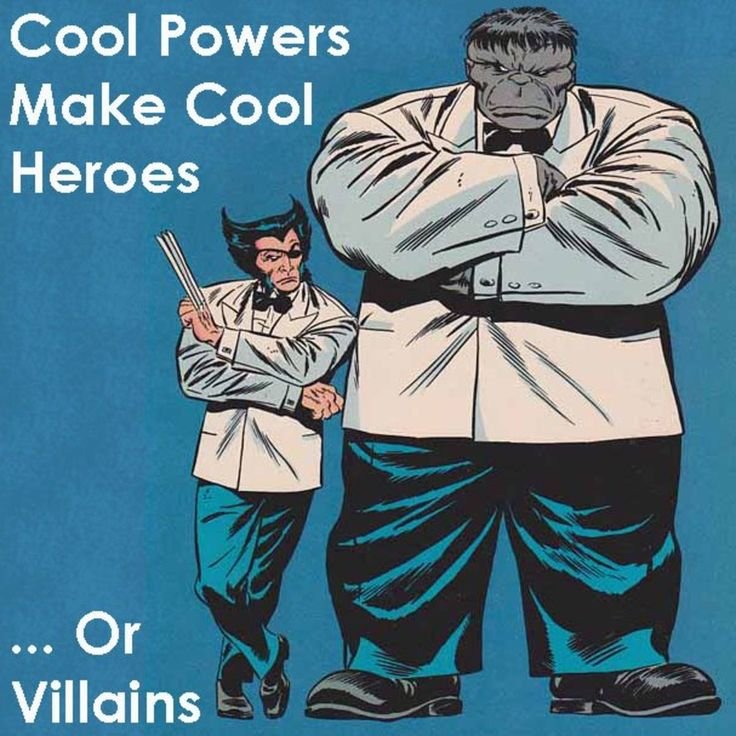
Forget flashy costumes and dramatic origin stories for a moment. At the very heart of what makes a hero compelling or a villain truly terrifying lies the ingenious art of Designing Powers for Heroes and Villains. It’s more than just giving someone super strength or the ability to fly; it's about crafting an extension of their very being, a narrative tool that deepens their story, fuels conflict, and resonates long after the last page or frame. When powers are meticulously designed, they don't just enable feats of derring-do; they become a window into character, motivation, and the very soul of your creation.
At a Glance: Crafting Compelling Powers
- Character First: Always start with your character’s personality, motivations, and flaws before even thinking about abilities.
- Purposeful Powers: Design powers that reflect your character's core identity, origin story, or even their deepest fears.
- Embrace Limitations: Weaknesses and drawbacks aren't hindrances; they're essential for tension, relatability, and growth.
- Hero vs. Villain: Differentiate powers not just by what they do, but how they're used and the impact they have on others.
- Iterate and Refine: Power design is a dynamic process; be ready to tweak and evolve abilities as your character develops.
Beyond the Punch: Why Character Drives Power Design
Before you even dream of laser eyes or teleportation, you need to know who your character is. Their personality, their moral alignment (hero, anti-hero, villain), and their deepest motivations are the bedrock upon which truly resonant powers are built. Think of it like this: Wreck-It Ralph's exaggerated, powerful fists aren't just for smashing; they're a physical manifestation of his destructive programming and his inherent strength, hinting at his role even before he speaks.
A power should never feel arbitrary. It should feel like an organic extension of the character, a natural consequence of their existence or experiences. If your character is fiercely protective, perhaps their power involves shielding or healing. If they're a master manipulator, telepathy or illusion casting might be their weapon of choice. This foundational work isn't just theory; it ensures your powers serve the story, rather than just existing for cool factor alone. It’s an iterative process, so embrace experimentation and remember to have fun with it!
Your Hero's Toolkit: A Spectrum of Abilities
The universe of potential powers is as boundless as imagination itself. From the grounded to the cosmic, abilities can be broadly categorized, each offering unique narrative possibilities. Understanding these categories helps you pinpoint the right fit for your character.
Physical & Augmented Powers
These often involve enhancing the body's natural capabilities or granting entirely new physical attributes. They’re straightforward, impactful, and easily visualize in action.
- Super Strength: The classic, allowing feats of incredible might, from lifting cars to shattering concrete.
- Super Speed: Blurring motion, incredible reflexes, and the ability to outpace any foe.
- Flight: The iconic symbol of aspiration and freedom, offering strategic advantages and breathtaking visuals.
- Regeneration: Rapid healing from injuries, making a character incredibly durable and resilient.
- Intangibility/Quantum Phasing: The ability to pass through solid objects, offering stealth and defensive capabilities.
Mental & Psychic Powers
Diving into the mind's mysteries, these powers often deal with perception, influence, and mental fortitude.
- Telekinesis: Moving objects with the mind, a versatile power for offense, defense, and utility.
- Telepathy: Reading minds, projecting thoughts, and establishing mental links, perfect for espionage or deep connection.
- Precognition/Retrocognition: Seeing the future or past, offering invaluable insights but often burdened by grim knowledge.
- Illusion Casting: Creating realistic sensory deceptions, ideal for misdirection, stealth, or psychological warfare.
- Mind Domination/Neural Manipulation: Directly controlling the thoughts and actions of others, a power with immense ethical implications.
Elemental & Natural Powers
Connecting characters to the fundamental forces of the world, these powers are often visually stunning and environmentally impactful.
- Elemental Control (Pyrokinesis, Hydrokinesis, Geokinesis, Aerokinesis): Mastery over fire, water, earth, or air, allowing for destructive blasts, defensive barriers, or environmental manipulation.
- Weather Control: Influencing atmospheric conditions, from gentle breezes to devastating storms.
- Plant Manipulation: Commanding flora, a power that can be surprisingly potent for growth, defense, or entanglement.
- Gravity Control: Bending the very force of gravity, allowing for flight, crushing foes, or creating localized singularities.
Magical & Mystical Powers
Drawing from arcane energies, ancient rituals, or inherent magical talent, these powers often come with a sense of wonder and complex rules.
- Energy Projection/Manipulation: Emitting or controlling various forms of energy, from raw arcane blasts to focused constructs.
- Enchantment: Imbuing objects with magical properties, leading to potent artifacts or cursed items.
- Portal Creation/Arcane Teleportation: Instantly moving across distances, opening gateways to other places or even dimensions.
- Necromancy/Spirit Summoning: Communicating with or controlling the dead or spirits, often associated with darker themes.
- Reality Warping/Distortion: The ultimate power to manipulate the fabric of reality itself, usually with immense costs or limitations.
When considering the vastness of options, don't be afraid to mix and match or put a unique spin on a classic. The key is to make it your own. You can even generate your superhero powers to spark some initial ideas, then refine them with your character's specifics in mind.
The Dark Side of Design: Crafting Villainous Powers
While heroes often use their powers for protection, healing, or justice, villains twist abilities for destruction, control, or corruption. The distinction isn't always in what a power does, but how it's wielded and the intent behind it. Villainous powers often prey on weaknesses, exploit vulnerabilities, or cause despair.
Consider these "evil" archetypes and how they diverge from heroic counterparts:
- Soul Manipulation vs. Healing: While a hero might heal the body, a villain with Soul Corruption or Soul Devouring might target the very essence of a being, twisting it for their own gain or consuming it for power.
- Mind Control vs. Empathy: A heroic empath might soothe emotions or understand intentions (Absolute Empathy). A villainous counterpart like Persuasive Empathy or Mind Domination would manipulate or forcefully control, bending others to their will.
- Elemental Destruction vs. Elemental Control: A hero might use fire to melt a cage, but a villain with Elemental Imprisonment could trap foes in cages of ice or lava, or possess Elemental Decay, causing natural forces to wither.
- Energy Drain vs. Energy Manipulation: Instead of generating or controlling energy like a hero (Energy Manipulation), a villain might specialize in Energetic Parasitism or Emotion Vampirism, feeding off the life force or feelings of others to sustain or empower themselves.
- Reality Twisting vs. Reality Anchoring: Where a heroic Reality Anchoring might stabilize reality, a villain with Reality Distortion or Chaos Manipulation actively seeks to unravel or corrupt it.
- Plague Manipulation: Spreading deadly diseases, a chilling contrast to a hero's healing abilities.
- Necrotic Infestation: Infecting living beings with malevolent energy, turning life into a source of decay.
The most effective villainous powers aren't just destructive; they're often deeply personal, reflecting the villain's own twisted desires, traumas, or philosophies. They embody the antithesis of what the hero stands for, creating a compelling conflict that goes beyond a simple brawl.
The Heart of the Story: Weaving Powers into Narrative
A power isn't a standalone feature; it's a dynamic element that interacts with every facet of your character and story. Thoughtful integration transforms a cool concept into a narrative powerhouse.
Origin Stories: The How and Why
How a character gains their powers fundamentally shapes who they become and how they use their abilities. An Origin Story isn't just backstory; it's destiny.
- Scientific Accident: A lab mishap, a dose of radiation, or an experimental procedure gone awry often grants unpredictable powers, forcing the character to adapt (e.g., The Hulk).
- Mystical Awakening: Ancient rituals, inherited magic, or a profound spiritual experience can bestow arcane abilities, tying the character to a rich, often dangerous, magical tradition.
- Genetic Mutation/Evolutionary Leap: Innate abilities that manifest over time, often making the character an outcast or a symbol of a new era (e.g., X-Men).
- Technological Enhancement: Advanced gadgets, cybernetic implants, or a cutting-edge suit that grants abilities, often highlighting human ingenuity or its dangerous potential.
- Divine Intervention/Cosmic Event: Powers granted by higher beings or from exposure to cosmic phenomena, imbuing the character with immense power but often a heavy burden.
The method of acquisition can dictate the character's relationship with their powers – do they embrace them, resent them, or struggle to control them?
Weaknesses & Limitations: The Stakes That Matter
An all-powerful character is a boring character. Weaknesses and limitations are not flaws in design; they are essential narrative tools that create tension, drive character growth, and make your hero or villain relatable. Without them, there are no stakes, no struggles, and no triumph.
- Specific Material Vulnerability: A hero immune to bullets might be harmed by a specific metal or energy.
- Power Overload/Energy Limitation: Using powers drains the character, requiring rest or a specific resource. This forces strategic thinking and prevents overuse.
- Emotional Trigger: Powers linked to mental state; they might falter under duress or become uncontrollable in anger.
- Moral Compass: A hero might refuse to use their full power if it means harming innocents, even a villain. This isn't a physical weakness but a profound moral one.
- Elemental Dependency: Perhaps a fire manipulator needs a constant heat source, or a water bender struggles in a desert.
- Psychic Feedback: Using telepathy too much causes crippling headaches or even psychic burnout.
These vulnerabilities make a character human (or relatable, even if alien). They create moments where the character must outsmart their opponent, rely on allies, or push past their personal limits.
Costumes & Visual Cues: Telling the Story Through Design
A character’s physical design, including their costume, should subtly—or not so subtly—hint at their abilities. It’s visual shorthand that deepens the immersion.
- The Elemental Robe: Flowing fabrics, earthy tones, or fiery motifs for elemental manipulators.
- Nano-Tech Suit: Sleek lines, glowing accents, and a form-fitting design for technologically enhanced characters, suggesting adaptability and advanced function.
- The Shadow Cloak: Dark hues and obscuring drapes for those who control shadows or practice stealth.
- Bioluminescent Bodysuit: Ethereal glows for light-based powers or those with energy projection.
Even beyond costumes, a character's physique can tell a story. A telekinetic might have an intense, focused gaze, while a super-strong individual might possess a naturally muscular build. These visual elements provide consistent thematic clues, enriching the reader's understanding without needing constant exposition.
A Practical Guide to Power Generation: Your Workshop
Ready to start designing? Here’s a structured approach to ensure your powers are compelling, consistent, and story-driven.
Step 1: Know Your Character Inside Out
Before you jot down a single power, answer these questions:
- Who are they? (Name, age, background, personality traits)
- What drives them? (Motivations, goals, fears, desires)
- Are they a hero, villain, or something in between? (Alignment)
- What are their core flaws and strengths?
Example: A timid librarian who secretly yearns for adventure and knowledge, but fears confronting conflict.
Step 2: Brainstorm Power Themes & Categories
Given your character's core, what kind of powers would naturally emerge or best serve their story?
- Does their origin suggest a certain power type (e.g., magic from an ancient artifact)?
- What themes resonate with their personality (e.g., stealth for a secretive character, brute force for a blunt one)?
Example (Librarian): Her yearning for knowledge might lead to mental powers like super intelligence or telepathy. Her timidity suggests she wouldn't immediately embrace direct combat, favoring subtle abilities.
Step 3: Introduce the "How" – Your Origin Story
Connect the chosen power theme to an origin that makes sense for your character and world.
- Did they gain powers through an accident, inheritance, or a deliberate act?
- How did this event impact them emotionally and physically?
Example (Librarian): While cataloging ancient texts, she discovers a forgotten grimoire that mystically grants her Meta-linguistics (understanding any language) and Retrocognition (seeing past events associated with objects she touches).
Step 4: Craft Meaningful Limitations and Weaknesses
No power is without its price. What are the drawbacks or vulnerabilities?
- Consider physical, mental, emotional, or environmental limitations.
- How do these weaknesses create conflict or force difficult choices?
Example (Librarian): Her Retrocognition comes with an overwhelming sensory overload, causing debilitating migraines if she touches too many objects or delves too deep. Her innate timidity also means she struggles to act on the vast knowledge she gains, creating internal conflict.
Step 5: Envision the Visuals and Impact
How do these powers manifest? What do they look like? How do they affect the world and the story?
- Consider how a costume might reflect the powers.
- How do bystanders react to the display of power?
- What kind of "signature move" or specific application stands out?
Example (Librarian): Her powers are subtle – a faint shimmer around an object she's reading the history of, or a slight widening of her eyes as she processes an unknown language. Her "costume" might be her regular, slightly conservative librarian attire, but perhaps she starts carrying a special, enchanted bookmark.
Step 6: Test, Refine, and Evolve
Power design is rarely a one-shot deal. Put your character through scenarios.
- Does the power feel consistent?
- Does it create interesting challenges for the character?
- Does it serve the narrative you want to tell?
- Are there any unforeseen implications in your world?
If something feels off, don't be afraid to change it. Your character and their story are living entities that will benefit from your ongoing attention.
Common Power Design Pitfalls (And How to Dodge Them)
Even seasoned creators can stumble. Here are some common traps and how to avoid them:
- The Overpowered Character (OP): A character with no weaknesses or limitations quickly becomes boring. If they can do everything, where's the struggle?
- Dodge: Always pair a powerful ability with a significant drawback. What's the cost? What are the limits?
- Generic Abilities: "Super strength" or "flight" without a unique twist can feel uninspired.
- Dodge: Add a specific flavor. Is it strength that grows with rage? Flight achieved by manipulating localized gravity? Give it a personal touch.
- Inconsistent Rules: Establishing rules for powers and then breaking them on a whim undermines trust and immersion.
- Dodge: Write down your power's rules, limitations, and how it works. Stick to them. If a new capability emerges, it needs a clear in-story explanation.
- Powers Without Purpose: Abilities that exist solely for spectacle without contributing to character or plot.
- Dodge: Every power should either reveal something about the character, create conflict, or advance the plot. If it doesn't, question its necessity.
- The "Deus Ex Machina" Power: A new power conveniently appears just to solve an impossible problem.
- Dodge: Foreshadow new abilities. If a character develops a new skill, show the struggle and growth involved, or have it be a natural evolution of an existing power.
Beyond the Individual: Powers in a World
Remember that your character's powers don't exist in a vacuum. They ripple outward, affecting the world, other characters, and the overall narrative.
- World-Building: How do your character's powers, or the existence of powers in general, shape society, politics, and technology in your fictional world? Does everyone have powers, or are they rare?
- Conflict & Stakes: Powers should naturally create and resolve conflict. A villain's destructive ability might necessitate a hero's defensive one.
- Character Interactions: How do powers influence relationships? Do they breed awe, fear, jealousy, or understanding?
- Ethical Dilemmas: What are the moral implications of manipulating minds, controlling elements, or raising the dead?
By considering these broader impacts, you elevate your power design from a mere checklist of abilities to a vital component of a rich, believable, and utterly captivating story.
Ready to Unleash Your Imagination?
The journey of Designing Powers for Heroes and Villains is one of the most exciting aspects of creation. It's where imagination meets purpose, and where character truly takes flight. Don't be intimidated by the sheer volume of possibilities; instead, see it as an invitation to explore. Start with your character's core, imbue their abilities with meaning, and embrace the narrative possibilities that limitations bring. The most memorable powers aren't just strong; they're resonant, meaningful, and unforgettable. So go forth, and craft abilities that don't just solve problems, but tell stories.